 EN
EN

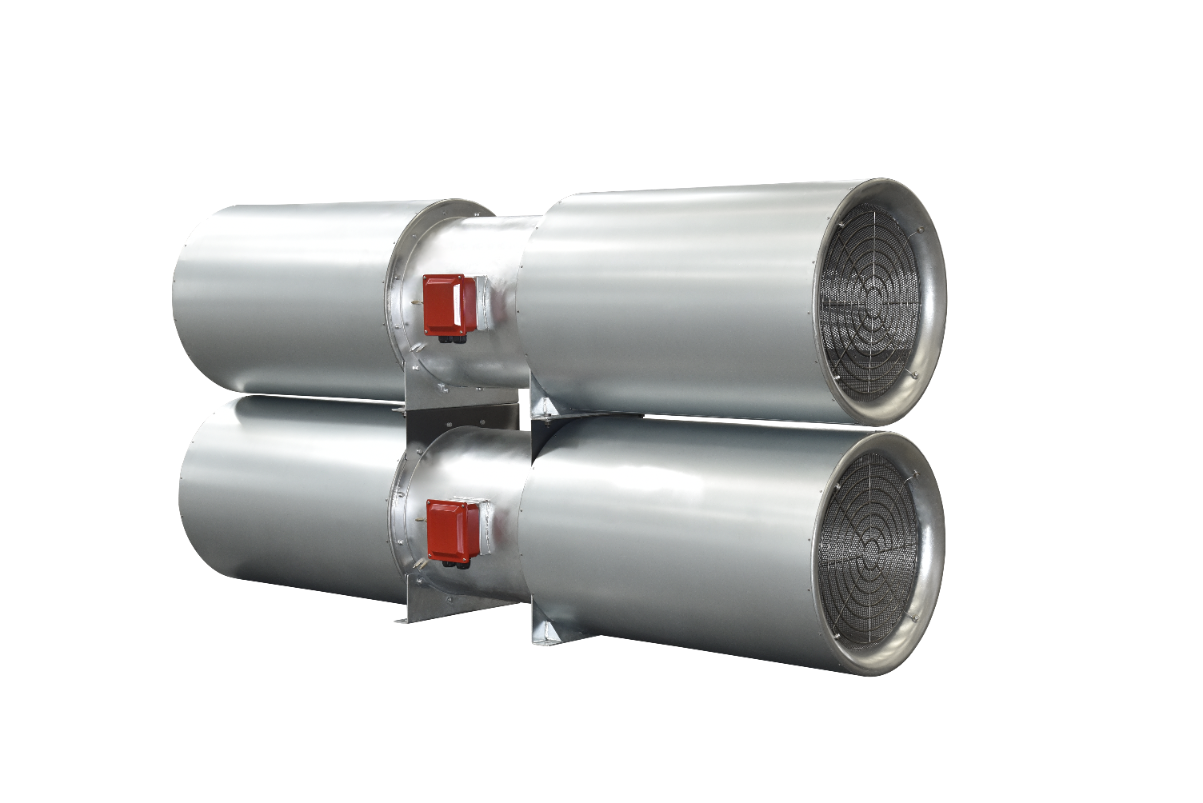
Core Performance Standard Framework Compliant With Global Tunnel Ventilation Norms
Founded in 1988, our enterprise holds 38 years of professional ventilation system R&D and manufacturing experience, with a 300,000 square meter intelligent production base, independent CNAS certified testing laboratory and Singapore SAC testing center, more than 110 proprietary patents covering tunnel jet fan thrust structure, high-temperature resistant motors and silencing assemblies. Our technical team has delivered over 1,000 cross-border tunnel engineering projects across 40+ countries, including long-distance highway tunnels, urban metro tunnels and underground railway passageways. A landmark Indonesia highway tunnel cooperation case fully demonstrates the necessity of unifying standardized B2B design specifications for tunnel jet fan before large-scale bidding procurement. The client initially received non-standard tunnel jet fan samples from small assembly suppliers; thrust deviation exceeded 22% under rated power, and the units failed continuous 280°C high-temperature fire resistance testing, which would lead to major hidden dangers for emergency smoke control. After adopting our full set of PIARC and AMCA aligned tunnel jet fan customized design scheme, all prototype performance indicators passed third-party lab inspection at one time, and the batch equipment matched tunnel longitudinal ventilation calculation models perfectly.
World Road Association (PIARC) ventilation specialists and AMCA testing experts jointly release unified B2B design baseline standards for tunnel jet fan, clearly stipulating three core performance pillars that all formal tunnel jet fan must satisfy in engineering bidding projects. First, steady thrust consistency under rated operating voltage, which shall be tested and recorded per ANSI/AMCA 250 laboratory calibration procedures; second, standardized high-temperature emergency running capacity complying with EN 12101-3 fire safety codes; third, controllable aerodynamic loss value optimized for tunnel crown suspended installation. Every tunnel jet fan produced by our factory completes full simulation testing in CNAS labs before formal design confirmation, covering normal traffic dilution ventilation mode and fire smoke extraction dual working conditions. Unlike small manufacturers that only test single air volume data, our design team integrates tunnel gradient, traffic flow and maximum design fire load into each tunnel jet fan parameter calculation, which forms the most fundamental standard boundary for B2B engineering procurement and avoids performance mismatch after on-site installation.
Fire Safety & High-Temperature Structural Design Standards For tunnel jet fan
Fire resistance structure counts as the highest-priority design clause in all B2B tunnel jet fan engineering procurement checklists, as tunnel jet fan bear the core smoke exhaust and air guidance tasks during vehicle fire emergencies. Based on thousands of underground tunnel project design archives accumulated by our R&D department, we form layered high-temperature protection design specifications exclusive to our full series tunnel jet fan, fully matching JTG/T D70 highway tunnel design guidelines and NFPA 502 international tunnel safety standards. A domestic mountain long tunnel EPC project showed the risk of simplified fire-resistant design: competing suppliers adopted ordinary Class B motors without integral heat insulation casings, and third-party simulation tests proved such tunnel jet would lose stable operation capacity after only 20 minutes under 250°C ambient temperature. Our tunnel jet fan configure Class H insulated high-temperature resistant motors, integrated double-layer heat insulation tubular shell and high-temperature aerodynamic aluminum impellers, capable of continuous stable operation for 120 minutes under 280°C environment, fully meeting emergency rescue design requirements of long-distance bidirectional traffic tunnels.
International tunnel fire safety consultants clarify mandatory structural design thresholds for qualified tunnel jet fan in B2B engineering cooperation. The motor cavity must adopt independent air isolation heat barrier to stop radiant high-temperature smoke from directly contacting winding components; impeller raw materials shall pass thermal shock cycle testing without deformation or crack; all internal wiring applies E90 fire-resistant cables with metal shielding conduits. Our factory’s B2B tunnel jet fan design standards further add corrosion matching clauses for coastal tunnel projects: all shell surfaces adopt hot-dip galvanizing plus double anti-salt fog coating, solving the problem of rust perforation of ordinary tunnel jet fan after short-term coastal operation. Each set of tunnel jet fan design documents provided to B2B clients attaches independent high-temperature aging test reports issued by CNAS lab, which can be directly submitted for engineering acceptance and cross-border customs compliance review, eliminating delays caused by incomplete fire certification materials during project delivery.
Aerodynamic & Noise Reduction Design Specifications For tunnel jet fan
Aerodynamic efficiency and controlled noise emission are two mutually restricted indicators in tunnel jet fan B2B design, and many unprofessional suppliers sacrifice thrust performance to cut noise or ignore acoustic standards leading to tunnel interior over-limit decibel values. Our internal design team develops integrated aerodynamic silencing structure standards for tunnel jet fan after repeated CFD airflow simulation, balancing thrust output and running noise to meet urban tunnel environmental protection acceptance norms. The Beijing Metro Line 3 deep underground tunnel project acted as a complete verification case of our standardized design system; the tunnel passes residential underground zones, with night noise limit strictly controlled below 75dB at 10 meters. Early alternative tunnel jet fan designs without layered silencing components generated 86dB running sound under rated thrust, failing environmental assessment. Our customized tunnel jet fan adopted dual-layer perforated silencer matching streamlined air inlet cone and optimized backward-curved impeller, cutting operating noise by 13dB while maintaining full design thrust without power consumption increase.
AMCA 300 acoustic testing standard documents point out standardized silencing layout rules for tunnel jet fan B2B design: silencer length shall reach 1 to 2 times fan diameter, internal fill adopts flame retardant superfine glass fiber sound absorption cotton, and airflow diversion cone must be added at both inlet and outlet to eliminate turbulent vortex noise. Our B2B tunnel jet fan design manual divides silencing configurations into three adjustable grades according to tunnel location: standard single-layer silencer for remote mountain tunnels, double-layer thickened silencing assemblies for urban residential adjacent tunnels, and ultra-low-noise customized structures for underground rail transit tunnels. Meanwhile, our unified aerodynamic design standard regulates impeller dynamic balance grade above G2.5 per ISO 1940 norms, reducing long-term vibration transmission from tunnel jet fan to tunnel concrete crown and avoiding secondary structural resonance noise. All aerodynamic parameter charts of tunnel jet fan are attached to B2 technical quotation files, allowing engineering designers to accurately calculate fan quantity and spacing according to tunnel cross-section area and vehicle exhaust dilution demand.
Corrosion Resistance & Mounting Structure Design Criteria For tunnel jet fan
Long-term underground damp, dust and coastal salt mist environments put forward strict anti-corrosion and stable mounting requirements for tunnel jet fan, which form independent design modules in complete B2B engineering procurement standards. Our factory sorts targeted casing, bracket and shock absorption design standards for tunnel jet fan based on three typical tunnel working environments: inland mountain tunnels, urban underground transit tunnels and coastal cross-sea traffic tunnels. The Indonesia large coastal highway tunnel project fully reflected the value of differentiated anti-corrosion design; generic tunnel jet fan with single paint coating developed obvious rust spots within half a year of operation, while our hot-dip galvanized plus fluorocarbon double coated tunnel jet fan maintained complete surface integrity after four years of continuous high-humidity salt fog exposure.
Global underground engineering design experts summarize three non-negotiable mounting and anti-corrosion design standards for B2B tunnel jet fan. First, fan shell minimum wall thickness shall not be less than 4mm for long-term vibration resistance; second, all suspension brackets and vibration isolators must adopt high-strength spring shock absorption components to block vibration transmission to tunnel concrete ceiling; third, fasteners use 316 stainless steel full set for coastal tunnel projects to avoid bolt rust locking during maintenance. Our B2B tunnel jet fan design files mark optional differentiated anti-corrosion schemes clearly for clients: basic hot-dip galvanizing for inland tunnels, fluorocarbon topcoat upgrading for humid urban underground passages, full stainless steel shell matching 316 hardware for cross-sea tunnel ventilation systems. Every set of tunnel jet fan mounting design drawing reserves standardized lifting anchor positions and maintenance operation gaps, matching tunnel crown pre-embedded steel bar layout common in international tunnel construction, reducing on-site installation difficulty and construction period for engineering contractors purchasing tunnel jet fan via B2B channels.
Intelligent Control Matching Design Standards For Batch tunnel jet fan Systems
Modern tunnel longitudinal ventilation relies on linked intelligent group control of multiple tunnel jet fan units, so complete B2B design standards must include supporting electrical linkage and sensor matching specifications instead of only single fan mechanical parameters. Our technical department forms unified intelligent matching design rules for tunnel jet fan B2B projects after cooperating with numerous tunnel electrical EPC contractors, covering CO/NOx sensor linkage, fire signal interlock, reversible rotation logic and remote cloud monitoring four core control modules. A domestic cross-city highway tunnel group framework order demonstrated our systematic control design advantage: competing tunnel jet fan suppliers only provided standalone motor without unified PLC communication protocol, requiring extra independent control cabinet re-development. Our tunnel jet fan reserve standardized industrial communication interfaces in motor control boxes, supporting unified group start-stop, speed regulation and forward-reverse switching via tunnel central control room without additional electrical transformation work.
PIARC tunnel operation technical reports emphasize that standardized linkage design is an indispensable part of tunnel jet fan B2B procurement design, requiring fan systems to automatically switch between daily dilution ventilation and fire smoke extraction mode within 3 seconds after receiving fire alarm signals. Our B2B tunnel jet fan design specification unifies reversible rotation performance index: reverse thrust maintains no less than 98% of forward rated thrust under 30-second quick switching, adapting bidirectional traffic tunnel smoke confinement requirements. All electrical matching design schemes of tunnel jet fan are free of charge provided to B2B engineering clients during pre-bid technical communication, including complete control cabinet wiring diagrams, sensor layout matching tables and remote monitoring parameter templates. Our full-cycle design service also supports late-stage adjustment of tunnel jet fan control logic according to project traffic forecast data, ensuring the whole tunnel jet fan group system operates at optimal energy-saving efficiency under both normal and emergency working conditions.
Table of Contents
- Core Performance Standard Framework Compliant With Global Tunnel Ventilation Norms
- Fire Safety & High-Temperature Structural Design Standards For tunnel jet fan
- Aerodynamic & Noise Reduction Design Specifications For tunnel jet fan
- Corrosion Resistance & Mounting Structure Design Criteria For tunnel jet fan
- Intelligent Control Matching Design Standards For Batch tunnel jet fan Systems