 EN
EN

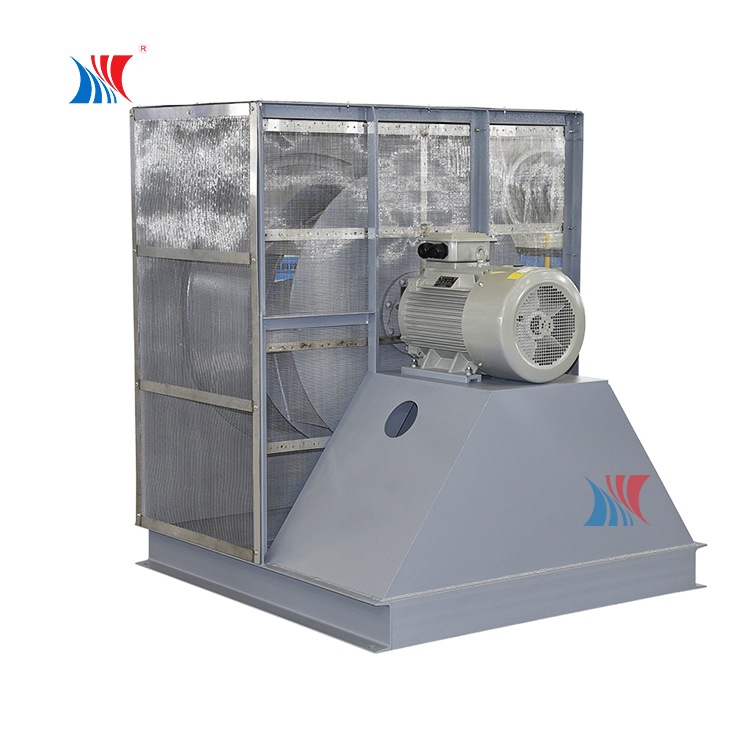
Why Cabinet Fan Noise Matters for User Comfort and System Performance
Excessive acoustic output from a cabinet fan is a critical performance parameter—not merely an aesthetic detail. In professional environments, noise directly influences user fatigue, focus, and productivity. A peer-reviewed study in the Journal of Consumer Research (2015) found that a 10 dBA increase in background noise reduces workplace productivity by up to 5%, a meaningful impact in precision-sensitive fields like healthcare or data analysis. Beyond comfort, elevated noise often signals underlying inefficiency—such as turbulent airflow or motor strain—that can degrade the long-term reliability of sensitive electronics housed within the cabinet. Research from a leading acoustic solutions provider further shows that sustained exposure to operational noise above 45 dBA increases human error rates by nearly 15% in laboratory settings. This evidence underscores why acoustic performance must be treated as a core functional requirement: effective thermal management should never compromise a focused, high-performance workspace.
Key Integrated Noise Reduction Techniques for Cabinet Fans
Aerodynamic Optimization: Blade Geometry and Airflow Path Design
Noise in cabinet fans originates primarily from turbulent airflow and pressure fluctuations around the impeller. Aerodynamic optimization targets these root causes through refined blade geometry and holistic airflow path design. Swept blades delay boundary layer separation; serrated trailing edges disrupt organized vortex shedding—both proven methods for lowering tonal noise. Inlet cones and guide vanes straighten incoming air before it reaches the blades, while diffuser sections decelerate flow evenly to suppress turbulence. Chevron nozzle-style outlets, for example, have demonstrated up to 41.6% noise reduction at discharge (Noise Reduction Engineering, 2023). Even subtle enhancements—like wavy inner wall treatments—can cut blade-tip noise by approximately 9% (Fluid Dynamics Research, 2022). These integrated refinements operate within the fan’s compact housing, delivering measurable acoustic gains without sacrificing cooling capacity or static pressure.
Acoustic Enclosure Engineering: Sound-Dampening Materials and Sealed Housing
The cabinet enclosure itself serves as a vital second line of defense. Strategic use of sound-dampening materials—including high-density acoustic foam, mineral wool, or engineered composite liners—on interior surfaces absorbs airborne noise and dampens structural vibration. Sealed housings with compression gaskets and precision-fitted panels eliminate common sound leakage paths. Testing by the Acoustics Materials Lab (2021) confirmed that adding a thin layer of acoustic damping foam inside a fan enclosure reduced overall noise levels by as much as 54.56%. Multi-layer constructions—where a rigid outer shell is mechanically decoupled from a compliant inner liner—further suppress low-frequency rumble. Critically, these acoustic upgrades also limit dust ingress, preserving blade balance and ensuring long-term acoustic consistency. When paired with vibration-isolating mounting points, the enclosure transforms the cabinet fan into a near-silent thermal component—containing both airflow and unwanted sound.
System-Level Integration: Motor, Control, and Validation for Ultra-Quiet Cabinet Fans
Achieving truly ultra-quiet operation demands more than isolated component improvements—it requires seamless system-level integration. The motor, its electronic controls, and validation methodology must function as a unified acoustic system. Only then can thermal performance and acoustic integrity be reliably balanced across real-world operating conditions.
Smart Motor Design with Vibration Damping and Low-Noise PWM Control
The motor remains the dominant source of both audible hum and mechanical vibration. A robust design begins with precision-balanced rotors and premium-grade bearings to minimize inherent vibration. Integrated vibration-damping mounts then decouple the motor from the chassis, preventing resonance amplification throughout the cabinet structure. On the control side, advanced Pulse Width Modulation (PWM) enables precise speed regulation—but implementation matters. Poorly tuned PWM can induce winding whine. High-fidelity drives use optimized algorithms and elevated switching frequencies to shift electrical noise beyond the 20 kHz human hearing threshold, ensuring smooth, silent operation across the full speed range.
Real-World Validation: Acoustic Testing and Performance Benchmarking
Theoretical noise reductions must be validated under realistic conditions. Leading manufacturers conduct ISO-compliant acoustic testing in controlled environments that replicate actual installation scenarios—measuring not just average sound pressure levels, but spectral content and tonal quality to identify perceptually intrusive peaks. Crucially, noise output is benchmarked alongside airflow and static pressure metrics to confirm thermal performance isn’t compromised. By correlating measured results against defined acoustic and thermal targets, this validation process verifies that system-level integration delivers on its promise: consistent, ultra-quiet operation that supports both equipment longevity and human performance.
FAQ
Why is cabinet fan noise important?
Cabinet fan noise affects user comfort, workplace productivity, and can signal inefficiencies in thermal management systems. Elevated noise impacts focus, increases fatigue, and damages sensitive electronics over time.
What causes noise in cabinet fans?
Noise primarily stems from turbulent airflow, pressure fluctuations around the impeller, and vibrations from the motor. Poorly designed aerodynamic and motor control systems amplify these issues.
How can cabinet fan noise be reduced?
Noise can be reduced through aerodynamic optimization, sound-dampening materials in enclosures, vibration damping mounts for motors, and advanced motor controls like PWM tuning.
How are noise reduction techniques validated?
Noise reduction methods are validated through acoustic testing and benchmarking against airflow and static pressure metrics in ISO-compliant environments to ensure thermal performance isn’t compromised.