 EN

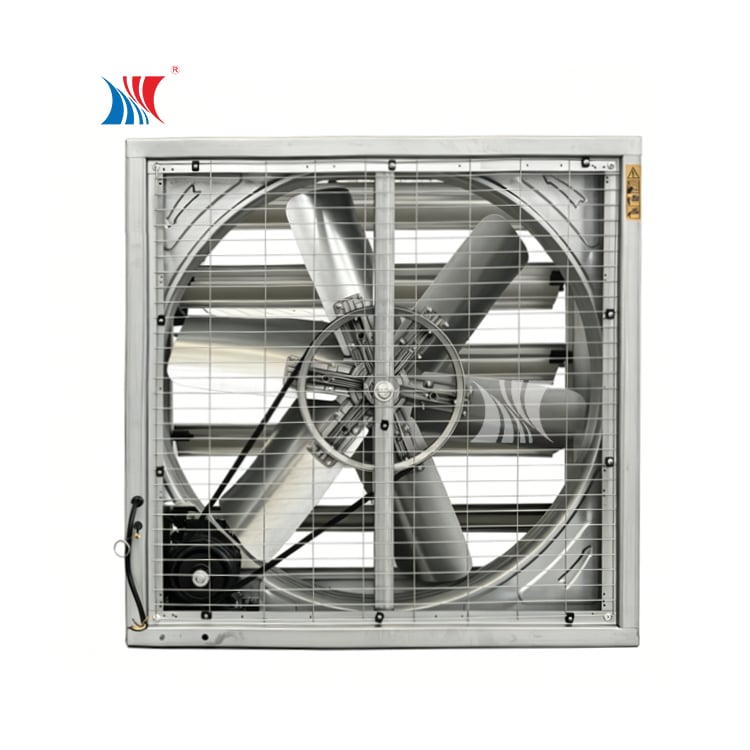
Critical Environmental and Regulatory Requirements for Underground Ventilation Fans
Managing Humidity, Corrosion, and Restricted Access in Subterranean Environments
Subterranean spaces routinely experience relative humidity exceeding 85%, accelerating metallic corrosion and degrading electrical insulation in ventilation fans. A 2022 industry survey by the International Tunnelling Association found that over 40% of early fan failures in deep basements and transport tunnels stem from moisture-induced damage or galvanic corrosion. Access constraints compound the issue: maintenance crews often work in narrow shafts or behind structural walls, turning routine blade cleaning into a multi-hour, high-risk operation.
To counter these conditions, a robust ventilation fan specification requires full-sealed motor enclosures rated IP55 or higher, stainless-steel impellers and hardware, and factory-applied epoxy powder coating resistant to peeling under constant dampness. Integrated condensate drains and anti-corrosion heaters expel moisture during idle periods. Modular fan assemblies—featuring front-side impeller removal and tool-less access panels—reduce mean-time-to-repair by 30–50%, significantly improving system availability in confined, hard-to-reach locations.
Compliance with GB 50016-2014 and EN 12101-3: Key Ventilation Fan Safety and Performance Mandates
The Chinese national standard GB 50016-2014 and the European harmonized standard EN 12101-3 impose rigorous fire-safety requirements on underground ventilation fans. GB 50016-2014 mandates that smoke-exhaust fans maintain structural integrity and specified airflow for at least 1.5 hours at 280 °C, with motor-side isolation and emergency power feed as mandatory provisions. EN 12101-3 classifies fans into F200, F300, and F400 categories, requiring verified continuous operation at those respective temperatures under full-scale furnace testing—and enforcing rising fan-total-efficiency thresholds with each duty class.
In practice, compliant fans must carry third-party certification from a notified body, such as a CNAS-accredited lab or EU-designated test house, and display the achieved F-class or high-temperature endurance time on the rating plate. Both standards also enforce acoustic limits (typically ≤85 dB(A) at 3 m) and vibration-velocity thresholds to prevent structural fatigue in densely reinforced underground chambers. Selecting a certified fan and integrating it with fire-damper controls ensures effective smoke extraction, maintains tenable egress paths, and aligns the entire ventilation system with national and cross-border regulatory obligations.
Ventilation Fan Selection: Matching Performance to Underground Space Constraints
Balancing Static Pressure and Airflow in Long Tunnels and Deep Basements
Selecting a ventilation fan for a confined underground space begins with resolving a fundamental tension: delivering sufficient airflow while overcoming high system resistance. Long tunnels and deep basements generate substantial static pressure due to geometry, duct friction, and obstructions. A fan selected solely on peak airflow (CFM) will underperform if it cannot generate adequate pressure to move air through kilometers of tunnel or multiple basement levels. The system curve—plotting required pressure against flow rate—must intersect the fan’s performance curve precisely at the target operating point, ensuring efficient, stable operation.
A mismatch manifests quickly: an undersized fan becomes an airflow bottleneck; an oversized one cycles erratically, wastes energy, and creates turbulent drafts. Effective selection starts with calculating total pressure loss (in Pa) from tunnel length, cross-section, air density, and surface roughness—only then can required airflow (dictated by occupant density or exhaust dilution needs) be matched to a fan rated to deliver that CFM at that specific pressure. Key performance variables include:
| Factor | Impact on Selection |
|---|---|
| System Resistance (Static Pressure) | Defines the minimum pressure capability; dominates in long, narrow, or heavily ducted applications. |
| Required Airflow (CFM) | Dictates volume capacity; often drives physical size and blade configuration. |
| Fan Efficiency Grade | Determines how much electrical input converts to useful air movement at the balance point. |
| Operating Noise Level | A critical constraint in enclosed spaces, directly influenced by tip speed and turbulence from pressure loss. |
High-efficiency axial fans excel in low-resistance, high-volume scenarios—rare in deep basements. For high static pressure, centrifugal fans—particularly those with backward-curved blades—deliver steeper pressure curves and superior efficiency at the design loading point. The final choice is a deliberate compromise: ensuring the fan breathes with the space, not against it.
EC vs. Induction Motors: Energy Efficiency, Control Precision, and Lifecycle Cost of Ventilation Fans
The motor defines a ventilation fan’s operational intelligence and long-term value. Traditional AC induction motors offer low initial cost and mechanical simplicity—but suffer steep efficiency losses at part load, and require external Variable Frequency Drives (VFDs) for speed control, adding complexity, footprint, and energy loss. Electronically Commutated (EC) motors integrate the motor, VFD, and permanent-magnet rotor, enabling precise, variable-speed control directly from a 0–10 V sensor signal while sustaining up to 90% efficiency across a wide operating range.
The economic advantage becomes clear when evaluating underground operational profiles. Continuous-duty ventilation systems accrue significant energy savings from EC motors’ flat efficiency curve—especially compared to induction motors whose performance collapses below 50% load. EC precision also eliminates over-ventilation, a common waste where induction fans run at fixed full speed due to lack of cost-effective alternatives. A comparative lifecycle analysis shows:
| Parameter | AC Induction Motor with VFD | EC Motor |
|---|---|---|
| Efficiency at Full Load | 70–76% | 85–90% |
| Part-Load Efficiency | Declines steeply below 50% load | Remains flat and high (>85%) |
| Control Integration | Requires external VFD, signal wiring, and panel space | Onboard; accepts direct sensor input |
| Typical Lifecycle Cost | Higher, driven by cumulative energy use and VFD maintenance | Lower; premium offset by energy savings within 2–3 years |
For budget-constrained, constant-volume applications, induction motors remain viable. But for any space requiring demand-controlled ventilation—such as CO₂-triggered airflow in parking garages or temperature-responsive control in tunnels—an EC motor delivers technically superior performance and stronger economic rationale, future-proofing the system for dynamic control requirements.
Strategic Whole-Set Configuration: Integration, Redundancy, and Future-Proofing
Beyond Sizing: Coordinating Fans, Dampers, Controls, and Power Backup as a Unified Ventilation Fan System
Selecting the right ventilation fan is only the first step; true performance emerges from system-level orchestration. In underground environments, fans must dynamically interact with dampers, sensors, and backup power to sustain safe conditions. A fan operating at peak efficiency in isolation can lose up to 30% of its airflow due to poor damper coordination—a frequent oversight in retrofits. The control system serves as the brain, modulating fan speed in real time using inputs from CO₂, temperature, and smoke detectors. Under EN 12101-3, the entire ensemble—including fire dampers and smoke extract fans—must function as a single certified unit within 60 seconds of alarm activation. Power backup integration is equally critical: the motor control center must transfer seamlessly to a dedicated emergency circuit, with restart delay held under 10 seconds—a requirement validated during commissioning. Treating the fan not as a standalone component but as part of a choreographed assembly prevents dangerous pressure imbalances and guarantees resilience when it matters most.
Case Insight: Shanghai Metro Line 14 Retrofit — Lessons in Scalable, Maintainable Ventilation Fan Deployment
The Shanghai Metro Line 14 tunnel ventilation upgrade demonstrates how whole-set thinking reduces lifecycle costs. Facing aging axial fans and tightening smoke-control codes, engineers avoided simple capacity upgrades. Instead, they modularized the ventilation array using standardized housings—enabling future capacity increases by adding impeller stages without structural modification (a strategy cutting future upgrade time by ~40%). Maintenance accessibility was prioritized: fan sets were mounted on sliding rails and fitted with quick-release duct connections, reducing motor replacement downtime from 12 hours to under 4. The control system incorporated open-protocol gateways to integrate legacy CO₂ sensors and new linear heat detectors—proving backward compatibility and forward flexibility can coexist. This retrofit confirmed that scalable, maintainable ventilation fan deployment hinges on pre-planning mechanical access, control interoperability, and accessory modularity—not just fan specifications.
FAQ
What are the key environmental challenges for underground ventilation fans?
Underground spaces typically have high humidity levels, which can cause corrosion and electrical insulation damage in ventilation fans. Restricted access also complicates maintenance, making robust and easily serviceable designs essential.
How do GB 50016-2014 and EN 12101-3 impact fan selection?
Both standards enforce critical safety and performance requirements, such as maintaining fan operation at high temperatures during fire events and meeting acoustic and vibration limits. Fans must also undergo third-party certification for compliance.
What determines the right fan for long tunnels or deep basements?
The chosen fan must align with the system curve, ensuring it can meet required airflow volumes while overcoming static pressure. Factors like system resistance, required airflow, and operating noise are key considerations.
Why are EC motors preferred over AC induction motors?
EC motors offer superior efficiency, especially at part loads, and have integrated speed controls that simplify installation. While they cost more initially, long-term energy savings and control precision often offset the premium.
What is whole-set configuration in ventilation systems?
Whole-set configuration involves integrating fans, dampers, controls, and power backup systems to operate cohesively. This ensures efficient airflow, compliance with safety codes, and resilience during emergencies.
Table of Contents
- Critical Environmental and Regulatory Requirements for Underground Ventilation Fans
- Ventilation Fan Selection: Matching Performance to Underground Space Constraints
- Strategic Whole-Set Configuration: Integration, Redundancy, and Future-Proofing
-
FAQ
- What are the key environmental challenges for underground ventilation fans?
- How do GB 50016-2014 and EN 12101-3 impact fan selection?
- What determines the right fan for long tunnels or deep basements?
- Why are EC motors preferred over AC induction motors?
- What is whole-set configuration in ventilation systems?