 EN

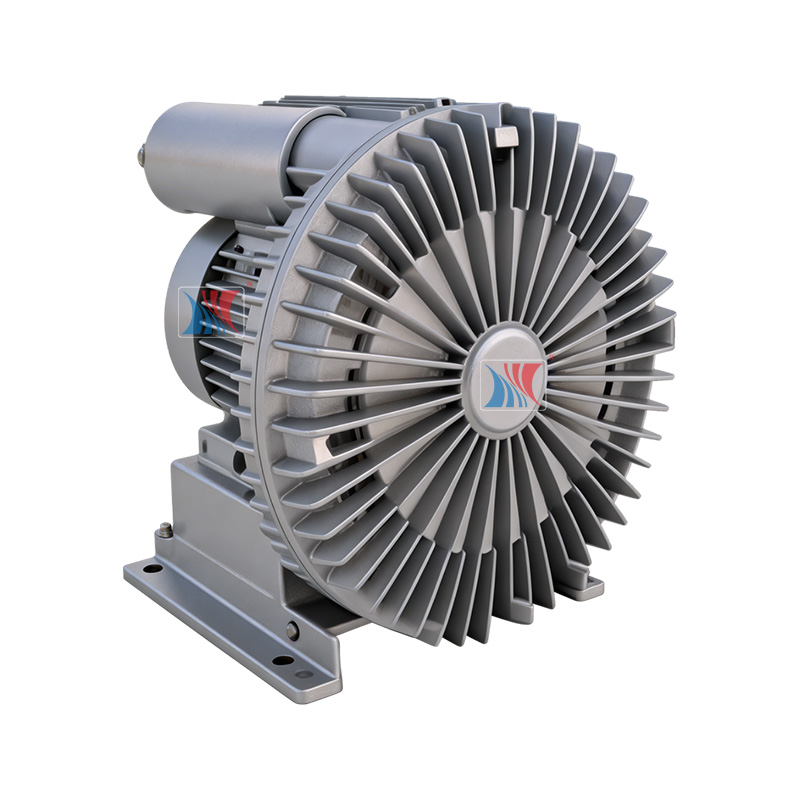
Why Vortex Blowers Excel in Critical Tunnel Ventilation
Airflow Instability Challenges with Conventional Fans
Standard axial and centrifugal fans struggle with airflow instability in road and metro tunnels, where rapid backpressure fluctuations arise from vehicle piston effects, variable train headways, and shifting portal wind pressures. Under these dynamic conditions, conventional fans often enter stall or surge regimes—causing flow separation at the blades, abrupt loss of effective airflow, and destructive mechanical vibration. The resulting oscillations degrade ventilation efficiency and impose cyclic stress on motors and support structures, accelerating wear and raising the risk of unplanned downtime. Maintaining stable air delivery typically demands costly variable frequency drives, complex damper controls, and redundant sensor arrays—driving up both capital and operational expenses.
Inherent Pressure Stability and Self-Regulating Flow Dynamics of Vortex Blowers
Vortex blowers overcome these limitations through a fundamentally different compression mechanism: instead of relying on blade-generated pressure, they use a multi-pass side channel design where air is repeatedly accelerated within a helical channel, building pressure progressively and without risk of sudden stall. This yields an inherently steep, stable performance curve—flow declines only modestly as backpressure rises, and the system continues delivering effective airflow without surging. Crucially, this self-regulating behavior enables real-time response to pressure shifts—such as those caused by an entering train compressing the air column—without active control intervention. The blower naturally shifts to a higher-pressure operating point, ensuring continuous toxic gas movement toward exhaust shafts across all traffic scenarios. This stability is essential for maintaining safe evacuation conditions and reliable fume extraction. Combined with a simple, robust construction, the design also reduces dependency on external controls—enhancing reliability in harsh, dust- and humidity-prone underground environments.
Designing and Deploying Vortex Blowers in Metro Ventilation Systems
Hybrid Vortex–Axial Configurations for Peak-Load Resilience
A hybrid configuration—pairing a vortex blower with an axial fan—delivers resilience across both steady-state and surge-demand conditions. While axial fans excel at high-volume output during peak traffic or emergency smoke extraction, they falter under sudden resistance spikes. The vortex blower compensates by sustaining stable airflow amid fluctuating pressure, preventing the stalls that commonly undermine pure axial systems. In practice, the vortex unit handles baseline and variable-pressure duties, while the axial fan activates only at predefined load thresholds. This staged operation avoids energy waste from continuous part-load running. Field data from metropolitan rail networks shows such hybrids reduce peak power draw by up to 18% compared to oversized single-technology arrays—and extend maintenance intervals, as mechanical wear concentrates on the more durable vortex stage.
Space-Efficient Mounting, Acoustic Dampening, and Fire-Safe Compliance
Metro tunnels demand compact, low-profile solutions. Vortex blowers meet this need with an inline, space-efficient design that fits into cramped plant rooms or suspended ceiling voids where conventional centrifugal or axial units cannot. Their low-vibration operation allows direct mounting—eliminating the need for heavy isolation pads and preserving critical vertical clearance. Noise control is built-in: integrated silencers and acoustic enclosures keep sound levels below 75 dB(A) at one meter, satisfying stringent urban transit noise ordinances. Critically, oil-free internal components remove fire risk from lubricant ignition—a non-negotiable requirement in underground settings governed by rigorous fire-life safety codes like EN 45545-2 and NFPA 130. All wetted parts are made from spark-resistant materials, and housings can be specified with fire-rated coatings. This convergence of small footprint, quiet operation, and inherent flame protection significantly reduces installation complexity and long-term compliance overhead for metro authorities.
Performance Validation: Vortex Blower Efficiency Under Real-World Tunnel Conditions
Field Data Insights: Variable Backpressure Performance from Oslo Tunnel Safety Trial (2022)
Independent field measurements from the 2022 Oslo tunnel safety trial confirmed the vortex blower’s ability to sustain stable airflow amid extreme pressure variability. When simulated vehicle queues increased static backpressure by 60%, the blower’s discharge velocity declined by just 4.7%—a fraction of the 20% drop observed in axial fans under identical conditions. Its self-regulating impeller dynamics flattened the fan curve without any control input. During a deliberate smoke-logging drill involving a steep pressure ramp, the vortex blower maintained airflow within 98% of design capacity—preventing the smoke stratification that had compromised earlier trials using legacy fans. Sound-level logging showed tonal noise rose only 1.2 dB(A) at peak backpressure, versus a 6 dB(A) spike for a reference centrifugal unit. Over six months, maintenance logs recorded zero unscheduled stops, and post-trial teardown inspection revealed no blade fatigue or deposit accumulation. These results validate that vortex blower performance translates reliably from lab-rated efficiency to real-world tunnel resilience—directly supporting fire-safety code compliance and lowering total lifecycle cost.
Future-Ready Ventilation: Smart Control and Scalable Vortex Blower Networks
IoT-Enabled Predictive Maintenance and Dynamic Airflow Modulation
Integrating IoT sensors into vortex blower networks unlocks predictive maintenance and adaptive airflow control. Vibration, temperature, and pressure telemetry enable early detection of component wear—minimizing unplanned downtime. Simultaneously, real-time inputs from occupancy counters and air-quality monitors allow dynamic modulation of airflow across distributed blowers, scaling output precisely to demand. This intelligent orchestration optimizes energy consumption while rigorously maintaining life-safety margins—making tunnel and metro ventilation not only more efficient but truly future-ready.
FAQ
Why are vortex blowers superior to conventional fans for tunnel ventilation?
Vortex blowers use a multi-pass side channel design that builds progressive pressure, avoiding sudden stalls or surges even under fluctuating backpressure conditions. This ensures stable airflow delivery in dynamic tunnel environments.
How do vortex blowers complement axial fans in hybrid configurations?
In hybrid systems, vortex blowers manage baseline and variable-pressure duties, while axial fans handle high-volume output during peak demand. This combination optimizes performance and reduces energy consumption.
Are vortex blowers fire-safe for metro tunnels?
Yes, vortex blowers feature oil-free components, spark-resistant materials, and optional fire-rated coatings, ensuring compliance with fire-life safety codes like EN 45545-2 and NFPA 130.
What data supports vortex blower efficiency in real-world conditions?
Field trials, like the 2022 Oslo tunnel study, confirmed vortex blowers sustain stable airflow under extreme pressure variability, outperforming axial and centrifugal fans in efficiency and reliability.
Can IoT technology enhance vortex blower systems?
IoT integration enables predictive maintenance and adaptive airflow control by monitoring vibration, temperature, and pressure telemetry, aligning performance with precise ventilation demands.
Table of Contents
- Why Vortex Blowers Excel in Critical Tunnel Ventilation
- Designing and Deploying Vortex Blowers in Metro Ventilation Systems
- Performance Validation: Vortex Blower Efficiency Under Real-World Tunnel Conditions
- Future-Ready Ventilation: Smart Control and Scalable Vortex Blower Networks
-
FAQ
- Why are vortex blowers superior to conventional fans for tunnel ventilation?
- How do vortex blowers complement axial fans in hybrid configurations?
- Are vortex blowers fire-safe for metro tunnels?
- What data supports vortex blower efficiency in real-world conditions?
- Can IoT technology enhance vortex blower systems?