 EN
EN

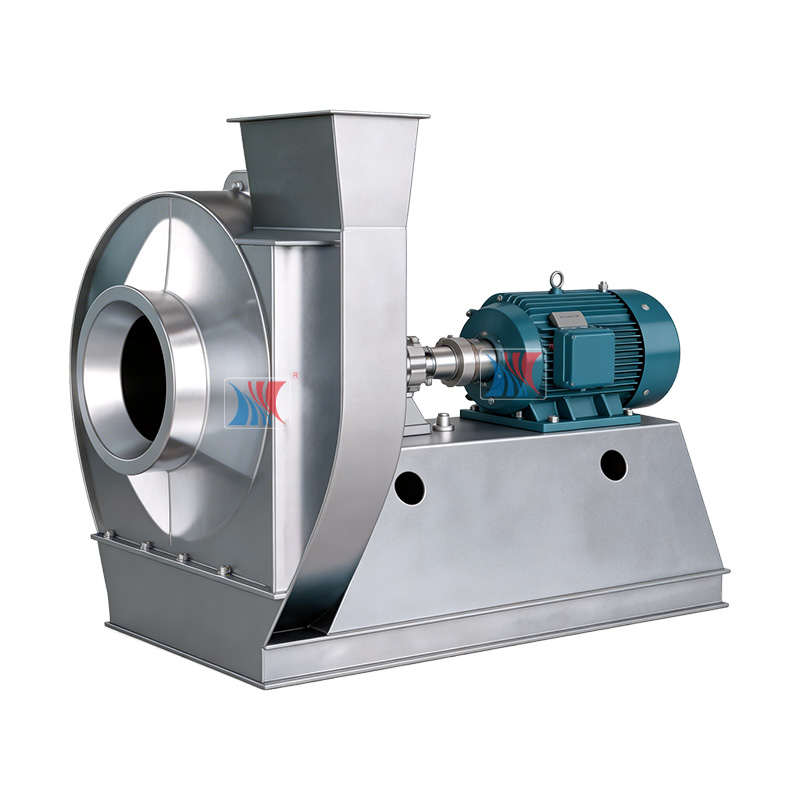
Understanding Industrial Blower Types and Working Principles
Industrial blowers are important components in ventilation, cooling, material handling, and industrial process systems. Their primary function is to generate airflow and pressure to move air, gases, or lightweight particles through a system.
The working principle of an industrial blower is based on converting mechanical energy from a motor into airflow energy. Different blower structures provide different pressure and airflow characteristics, making selection dependent on application requirements.
The two most common categories are centrifugal blowers and axial blowers.
Centrifugal blowers use rotating impellers to move air outward through the housing. They are suitable for applications requiring higher pressure and stable airflow, such as industrial exhaust systems, combustion air supply, and pneumatic conveying.
Axial blowers move air parallel to the rotating shaft, similar to a propeller design. They are commonly used where large airflow volume and lower pressure are required, including ventilation, cooling, and air circulation systems.
Modern industrial blowers may incorporate technologies such as variable frequency drives (VFDs), optimized impeller designs, and advanced control systems to improve efficiency, reduce noise, and adapt to changing operating conditions.
Key Parameters for Selecting the Right Industrial Blower
Choosing an industrial blower requires careful consideration of airflow, pressure, motor capacity, and operating environment.
Airflow is usually measured by volume flow rate and determines how much air the blower can move within a specific time. Static pressure represents the resistance that the blower must overcome from duct systems, filters, dampers, and other components.
A suitable blower must match the system resistance curve. Selecting a blower without considering actual operating conditions may result in insufficient airflow, unnecessary energy consumption, or reduced equipment life.
Motor power and efficiency are also important factors. The motor should match the blower design, operating speed, and application requirements. For systems with changing airflow demand, VFD-controlled blowers can adjust operating speed to improve energy efficiency and maintain stable performance.
Material selection is another consideration, especially in harsh environments. Stainless steel components, coated impellers, or corrosion-resistant materials may be used where moisture, chemicals, or aggressive gases are present.
Industrial Applications of Blower Systems
Industrial blowers are widely used across manufacturing and process industries because they provide reliable airflow control.
In material handling applications, blowers support pneumatic conveying systems by creating the airflow needed to transport powders, granules, and lightweight materials. Stable pressure performance is essential for maintaining efficient conveying.
For combustion systems, blowers provide controlled air supply to support efficient fuel burning and stable operation. Proper airflow regulation helps maintain consistent process conditions.
Industrial exhaust and ventilation systems rely on blowers to remove heat, fumes, dust, and unwanted gases from production areas. The correct blower selection depends on factors such as air quality, duct resistance, and operating environment.
In wastewater treatment facilities, blowers supply air for aeration processes. Energy-efficient blower solutions, combined with proper control systems, can help reduce operating costs while maintaining required oxygen supply.
Cooling applications also benefit from industrial blowers, particularly in manufacturing processes where airflow is needed to remove heat and maintain equipment performance.
Maintenance and Reliability Considerations for Industrial Blowers
Regular maintenance plays an important role in extending blower service life and maintaining stable operation.
Common maintenance practices include:
Checking vibration levels
Inspecting bearings and rotating components
Monitoring motor performance
Cleaning filters and airflow passages
Inspecting belts, seals, and connection points
Predictive maintenance technologies, such as vibration monitoring and condition analysis, allow operators to identify potential issues before unexpected failures occur.
Selecting a reliable industrial blower manufacturer is equally important. Factors such as manufacturing quality, material selection, balancing accuracy, and after-sales support directly influence long-term equipment performance.
For industries with demanding airflow requirements, customized blower solutions can provide better compatibility with specific operating conditions, improving efficiency and reliability.
FAQ
What are the main types of industrial blowers?
The main types are centrifugal blowers and axial blowers. Centrifugal models are generally used for higher-pressure applications, while axial blowers are suitable for high-volume airflow requirements.
How do I choose the correct industrial blower?
Selection should consider airflow requirements, static pressure, system resistance, motor power, operating environment, and application conditions.
Why are VFDs used in industrial blower systems?
VFDs allow blower speed adjustment according to system demand, helping improve control flexibility and energy efficiency in variable-load applications.
Where are industrial blowers commonly used?
Industrial blowers are used in ventilation, cooling, combustion air supply, material conveying, wastewater treatment, and manufacturing processes.
What maintenance is required for industrial blowers?
Regular inspection, lubrication, vibration monitoring, cleaning, and replacement of worn components help maintain reliable blower operation.