 EN
EN

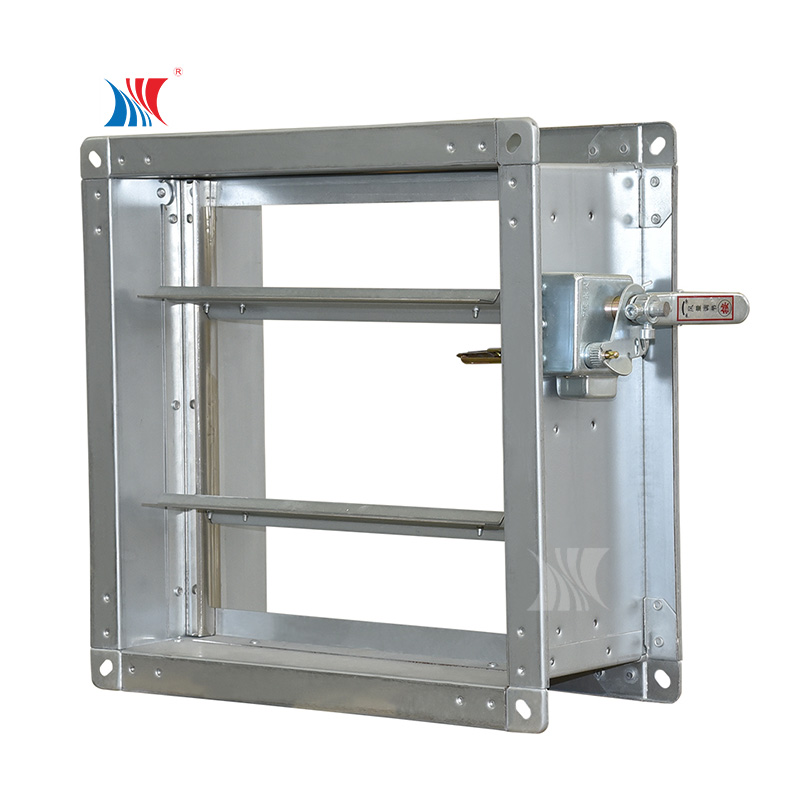
The Role of Control Valves in Industrial Ventilation Systems
Industrial ventilation systems rely on accurate airflow regulation to maintain indoor air quality, process stability, and safe working environments. While industrial fans provide the driving force for air movement, control valves and dampers help regulate airflow distribution according to changing operational requirements.
A properly selected airflow control device helps maintain balanced pressure throughout duct networks, reduces unnecessary energy consumption, and improves overall system performance. In applications such as exhaust ventilation, laboratory environments, manufacturing facilities, and air treatment systems, precise airflow adjustment is essential for reliable operation.
The key performance requirements for ventilation control components include accurate modulation, low pressure loss, reliable sealing, and compatibility with automation systems. These factors directly influence fan efficiency, operating costs, and system stability.
Key Factors When Selecting Ventilation Control Valves
Modulation Accuracy and Pressure Loss
A ventilation control valve should provide stable airflow adjustment across different operating conditions. Accurate modulation helps maintain target airflow levels when system demand changes, preventing problems such as insufficient exhaust capacity or unstable room pressure.
Low pressure loss is also an important consideration. Excessive resistance within the duct system forces industrial fans to work harder, increasing energy consumption. Selecting a valve with suitable flow characteristics helps maintain efficient fan operation.
For industrial ventilation projects, valve selection should always consider the complete airflow system, including fan capacity, duct resistance, operating environment, and control requirements.
Sealing Performance and Safety Considerations
In ventilation applications involving hazardous gases, contaminants, or controlled environments, sealing performance becomes especially important.
Proper sealing helps reduce unwanted air leakage, maintain pressure zones, and prevent cross-contamination between different areas. Depending on the application, control components may need to meet industry standards related to leakage performance, fire protection, or indoor air quality.
Standards such as ASHRAE ventilation guidelines, NFPA requirements, and valve leakage classifications can provide reference points during system design.
Comparing Common Airflow Control Valve Designs
Different valve designs provide different advantages depending on the ventilation application.
Butterfly valves are widely used because of their compact structure, simple installation, and suitability for many low and medium pressure air systems. They are often selected where space and cost efficiency are important.
V-ball valves provide more precise flow control through their characterized opening design. They are suitable for applications requiring stable modulation and improved control accuracy.
Modulating dampers are commonly used in air handling and duct systems where large airflow adjustment is required. Their simple structure makes them practical for many industrial ventilation installations.
The best choice depends on airflow requirements, pressure conditions, installation space, and control system integration.
Material Selection for Industrial Exhaust Applications
Material selection plays an important role in extending equipment life, especially in industrial environments where air streams may contain moisture, chemicals, or corrosive substances.
Aluminum components provide lightweight construction and good resistance to general atmospheric conditions, making them suitable for many standard ventilation applications.
Stainless steel, especially corrosion-resistant grades such as 316 stainless steel, is commonly selected for demanding environments where improved chemical resistance is required.
Seal materials should also match the operating conditions. PTFE-based sealing solutions are often used in applications requiring strong chemical resistance, while elastomer materials may be suitable for general air handling environments.
Choosing the right combination of body materials and sealing components helps ensure reliable operation and reduces maintenance requirements.
Proper Control Valve Sizing for Efficient Airflow Management
Correct sizing is essential for achieving stable ventilation performance. Oversized valves may reduce control accuracy, while undersized valves can create excessive pressure loss and limit airflow capacity.
The flow coefficient (Cv) is commonly used to describe valve capacity. For gas and air applications, engineering calculations consider factors such as pressure difference, temperature, gas density, and flow conditions.
International references such as ISA-75.01.01 provide guidance for control valve sizing calculations, while ISO 5208 provides pressure testing requirements for industrial valves.
Proper sizing ensures that the valve operates effectively within its intended control range and supports efficient industrial fan performance.
Actuator Selection for Reliable Ventilation Control
The actuator determines how accurately and reliably a control valve responds to system commands.
Pneumatic actuators are widely used in industrial environments because of their durability and suitability for continuous operation. Spring-return designs can provide a fail-safe position during loss of control power.
Electric actuators offer convenient integration with building management systems and automated control platforms. They are commonly used where precise positioning and digital communication are required.
Selecting the correct actuator requires consideration of valve size, operating torque, response requirements, environmental conditions, and safety functions.
FAQ
Why are control valves important in industrial ventilation systems?
Control valves regulate airflow distribution and help maintain stable ventilation performance. They work together with industrial fans to improve efficiency and system reliability.
How do control valves affect industrial fan energy consumption?
Poorly selected valves can increase system resistance and force fans to consume more energy. Proper airflow regulation helps fans operate closer to their efficient operating point.
Which valve type is best for ventilation applications?
The best choice depends on the system requirements. Butterfly valves are common for general applications, while V-ball valves and modulating dampers may be preferred for applications requiring more precise control.
What materials are suitable for industrial exhaust systems?
Stainless steel and corrosion-resistant sealing materials are commonly used for industrial exhaust applications involving moisture or chemical exposure.
How are control valves sized for airflow systems?
Sizing considers airflow rate, pressure difference, temperature, gas properties, and system requirements. Proper calculation helps ensure stable operation and efficient airflow control.
Table of Contents
- The Role of Control Valves in Industrial Ventilation Systems
- Key Factors When Selecting Ventilation Control Valves
- Comparing Common Airflow Control Valve Designs
- Material Selection for Industrial Exhaust Applications
- Proper Control Valve Sizing for Efficient Airflow Management
- Actuator Selection for Reliable Ventilation Control
- FAQ