 EN
EN

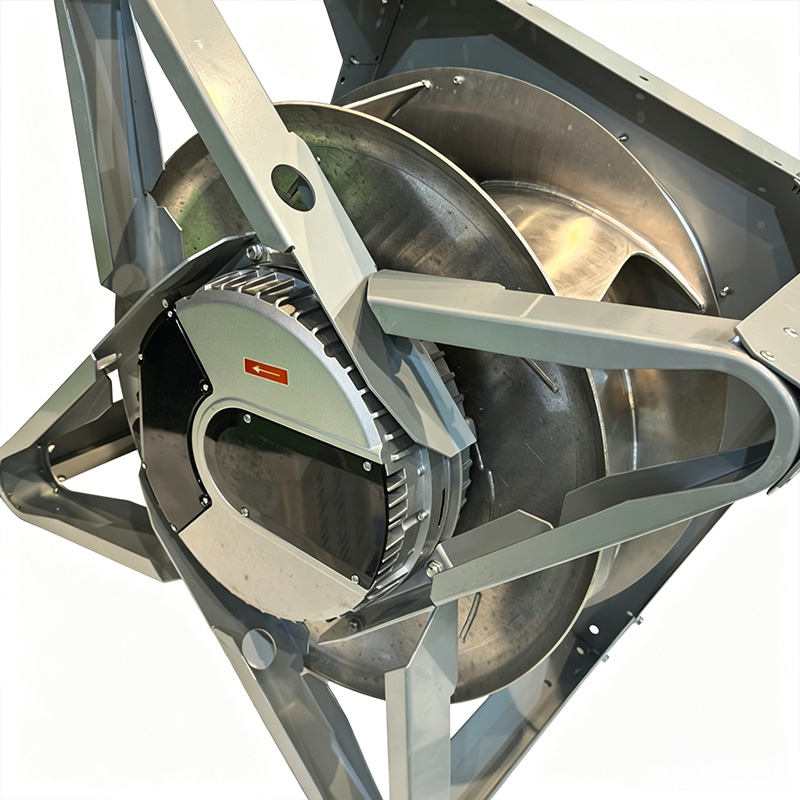
Identify Three Core Noise Sources Of Standard household hvac fan
Founded in 1988 with a 300,000 square meter intelligent manufacturing base, our brand holds 38 years of professional R&D and production experience covering axial, centrifugal and cabinet hvac fan products, equipped with CNAS certified acoustic testing laboratories to conduct full sound measurement for all household hvac fan lines. Over thousands of residential ventilation renovation projects we have delivered across more than 40 countries, a typical family villa HVAC upgrade case clearly illustrates how misjudged noise sources lead to repeated renovation costs. A homeowner from a Southeast suburban community replaced three sets of ordinary household hvac fan within one year, yet low-frequency humming and turbulent airflow roar still disturbed daily rest. After our acoustic technicians conducted on-site spectrum testing, we separated three independent noise sources from their old equipment: unbalanced impeller mechanical vibration, sharp airflow turbulence noise generated by rough blade edges, and structural resonance transmitted through rigid metal mounting brackets. We replaced their old units with our factory’s fully optimized silent household hvac fan with integrated shock absorption and aerodynamic blade design, cutting indoor operating sound pressure level from 76dB down to 32dB, fully meeting ASHRAE residential NC30 quiet space standards.
Acoustic testing specialists following AMCA 300 and AHRI 260 international fan sound standards classify all noise emitted by household hvac fan into three non-overlapping categories. The first type is mechanical vibration noise produced by eccentric rotating impellers and worn motor bearings; even tiny weight imbalance on fan blades will generate continuous low-frequency hum that propagates through walls and ceiling slabs. The second category is aerodynamic turbulence noise, the most common trouble for low-end household hvac fan, caused by abrupt air separation on crude straight blades and narrow inlet grilles that create chaotic air vortexes during operation. The third source is structural resonance noise, formed when rigid metal brackets connect fan housings directly to building concrete, turning small internal vibration into loud rattling inside living rooms. All household hvac fan manufactured in our factory complete full octave band noise testing in CNAS labs before mass production, recording separate sound data for vibration, airflow and resonance to carry out targeted structural optimization, a complete testing process most small-scale fan suppliers omit completely. Accurate source identification is the primary premise to permanently lower operating noise of household hvac fan, avoiding blind replacement of whole equipment without solving root acoustic defects.
Optimized Aerodynamic Blade Design Cuts Airflow Noise Of household hvac fan At Source
Aerodynamic structural improvement is the most fundamental noise reduction solution for household hvac fan, as reshaped blade outlines can eliminate turbulent air vortexes that account for over 60% of total running sound volume. Our internal R&D team with over 110 independent patents spent years simulating thousands of air flow trajectories to develop proprietary serrated airfoil blades exclusive to our household hvac fan series. A residential apartment central air renovation project in European suburbs fully verified this aerodynamic optimization advantage; the original matching generic household hvac fan with flat straight blades produced harsh high-frequency wind roar when running at medium speed, disturbing evening reading and sleep time. After switching our airfoil household hvac fan with serrated trailing edges, airflow turbulence intensity dropped sharply, and high-frequency noise components above 2kHz were reduced by more than 18 decibels without sacrificing required air exchange volume.
HVAC aerodynamic design experts published industry technical papers pointing out that straight-edged fan blades create strong air separation at rotation rear edges, forming periodic vortex shedding that generates piercing wind noise, while curved airfoil profiles with micro serrations disperse concentrated air eddies into gentle scattered flow. Every household hvac fan produced by our factory adopts integrated one-step die-cast airfoil impellers instead of spliced metal blades; we adjust blade curvature, installation angle and serration density according to different household usage scenarios including bedroom ducted hvac fan, bathroom exhaust hvac fan and living room fresh air hvac fan. Unlike thin stamped blades used in cheap household hvac fan that deform after long-term rotation, our thickened impeller raw materials maintain stable aerodynamic shape after years of continuous operation, preventing secondary noise rise caused by blade warpage. This source-side airflow noise control design embedded into all our household hvac fan eliminates the need for bulky external silencer boxes, saving indoor ceiling installation space while delivering consistent quiet ventilation performance for long-term household use.
Integrated Vibration Isolation Structure Blocks Mechanical Noise Transmission Of household hvac fan
Even if airflow noise is well controlled, unisolated mechanical vibration from household hvac fan motors and rotating impellers will transmit low-frequency hum through building structures, forming hard-to-eliminate background noise in bedrooms and study rooms. All our silent household hvac fan are equipped with multi-layer shock absorption assemblies as standard configuration, a mature structural solution summarized from thousands of household installation cases across global markets. A coastal town family HVAC renovation project fully reflected the value of full vibration isolation matching; their previous household hvac fan was fixed directly on ceiling metal keels without any buffer pads, and low-frequency vibration could be clearly felt on the bedroom wall even when the fan was placed two rooms away. Our technicians replaced the equipment with our integrated shock-absorbing household hvac fan, fitted with high-density rubber damping grommets between motor and housing plus suspended spring hanger kits for ceiling mounting. After reconstruction, vibration transmission to ceiling slabs decreased by over 90%, and the annoying low hum disappeared completely.
ASHRAE acoustic control guidelines clarify that rigid hard connections between household hvac fan and building supports act as sound bridges that amplify mechanical vibration noise, while multi-stage elastic isolation can cut vibration conduction paths in layers. Our factory equips each household hvac fan with two sets of standardized shock absorption accessories according to installation types: wall-mounted units adopt thick composite rubber shock pads between base and wall surface, while ceiling ducted household hvac fan support independent spring suspension hangers wrapped in sound insulation cotton. We also separate motor chambers from air ducts via flexible soft fabric connectors on all household hvac fan, stopping vibration from spreading along metal air pipe walls to every room air outlet. Many ordinary household hvac fan only add single thin rubber mats as afterthought damping measures, which lose elasticity within one year of operation; our high-temperature resistant EPDM shock absorption materials maintain stable buffer performance for over 10 years under indoor constant temperature environments, avoiding recurring vibration noise troubles after short service cycles. Complete vibration isolation matching is essential to block mechanical noise propagation paths of household hvac fan and achieve long-lasting quiet household ventilation operation.
Standardized Duct Layout Rules Avoid Secondary Noise Amplification Of household hvac fan
Many homeowners only focus on selecting low-noise household hvac fan units but ignore unreasonable air duct layout that re-amplifies fan running noise, wasting the mute performance of high-quality fan equipment. Our professional after-sales engineering team summarizes unified household air duct acoustic layout standards accumulated from residential HVAC renovation projects covering villas, high-rise apartments and small townhouses. A compact urban apartment fresh air project showed typical duct-induced noise problems; the installer arranged sharp right-angle elbows within one meter of the household hvac fan outlet and used thin unlined plastic ducts, causing obvious airflow whistling even with medium fan speed. We readjusted the pipeline route by adding radius rounded elbows, pasting internal sound absorption lining on all main ducts and extending straight pipe segments at fan inlet and outlet, cutting secondary duct noise by nearly 22dB with the same household hvac fan operating parameters unchanged.
International air duct acoustic design consultants state three core layout principles to prevent secondary noise amplification for household hvac fan. First, maintain at least 1.5 meters of straight duct at fan inlet and outlet to stabilize airflow before passing through elbows or dampers, avoiding turbulent collision that creates extra noise. Second, replace sharp 90-degree right-angle duct elbows with large radius curved fittings to reduce airflow impact loss; internal acoustic insulation cotton with fireproof coating shall be attached on all long-distance main air pipes of household hvac fan systems. Third, control air velocity inside household ventilation ducts below 2.5m/s by expanding pipe diameter properly, as excessive wind speed will generate continuous friction noise on duct inner walls. When customers purchase our household hvac fan, our multilingual technical engineers provide free matched duct layout sketch suggestions according to room floor plans, marking reasonable elbow positions, straight pipe lengths and sound absorption laying ranges. Unlike fan suppliers that only deliver standalone household hvac fan without pipeline acoustic guidance, our one-stop solution unites silent fan hardware and standardized duct design to fully release built-in noise reduction performance of each household hvac fan unit.
Full-Cycle Custom Silent household hvac fan Matching & Technical Support
Achieving ideal low-noise operation of household hvac fan relies not only on single unit mute design, but also full-cycle pre-sales matching consultation and post-installation technical guidance provided by professional hvac fan manufacturers with complete acoustic R&D capacity. Our brand as a national high-tech enterprise with CNAS testing labs supports customized silent parameter adjustment for household hvac fan according to room area, ceiling height and local residential noise control regulations, serving over 1,000 global residential and light commercial projects across 40+ countries. A long-term cooperative chain property management group specializing in high-end residential buildings fully demonstrates our full-cycle silent fan service strengths; every year we develop optimized low-noise versions of household hvac fan matching their standard apartment sizes, and provide free on-site acoustic measurement before new building HVAC layout design. Our technical team also delivers post-install noise testing and parameter fine-tuning services after household hvac fan installation, adjusting fan running speed via EC intelligent drive modules to balance ventilation demand and sound level without extra equipment replacement costs.
Cross-border residential HVAC procurement consultants remind global property developers and individual homeowners to prioritize hvac fan manufacturers with independent acoustic labs rather than ordinary assemblers without noise testing capacity. Before confirming household hvac fan orders, our design team collects detailed information including room function (bedroom, bathroom, study), ceiling mounting mode and allowable indoor decibel limits, then recommends targeted airfoil blade, shock absorption and duct matching combinations from our household hvac fan product line. After production and global delivery to all cooperative regions, our after-sales department provides illustrated installation manuals with shock absorption and duct layout tutorial videos. If minor noise abnormalities appear after long-term household hvac fan operation, we supply original balanced impellers and replacement shock absorption parts with fast cross-border logistics at preferential prices. All acoustic test data and silent structural design archives of each household hvac model are permanently stored in our factory database, supporting consistent low-noise customized reproduction for repeated residential construction projects years later. From early noise source diagnosis and silent fan model selection to post-install acoustic debugging and long-term spare part supply, our integrated service system removes all obstacles for users pursuing ultra-quiet running performance of household hvac fan in daily living spaces.
Table of Contents
- Identify Three Core Noise Sources Of Standard household hvac fan
- Optimized Aerodynamic Blade Design Cuts Airflow Noise Of household hvac fan At Source
- Integrated Vibration Isolation Structure Blocks Mechanical Noise Transmission Of household hvac fan
- Standardized Duct Layout Rules Avoid Secondary Noise Amplification Of household hvac fan
- Full-Cycle Custom Silent household hvac fan Matching & Technical Support