 EN
EN

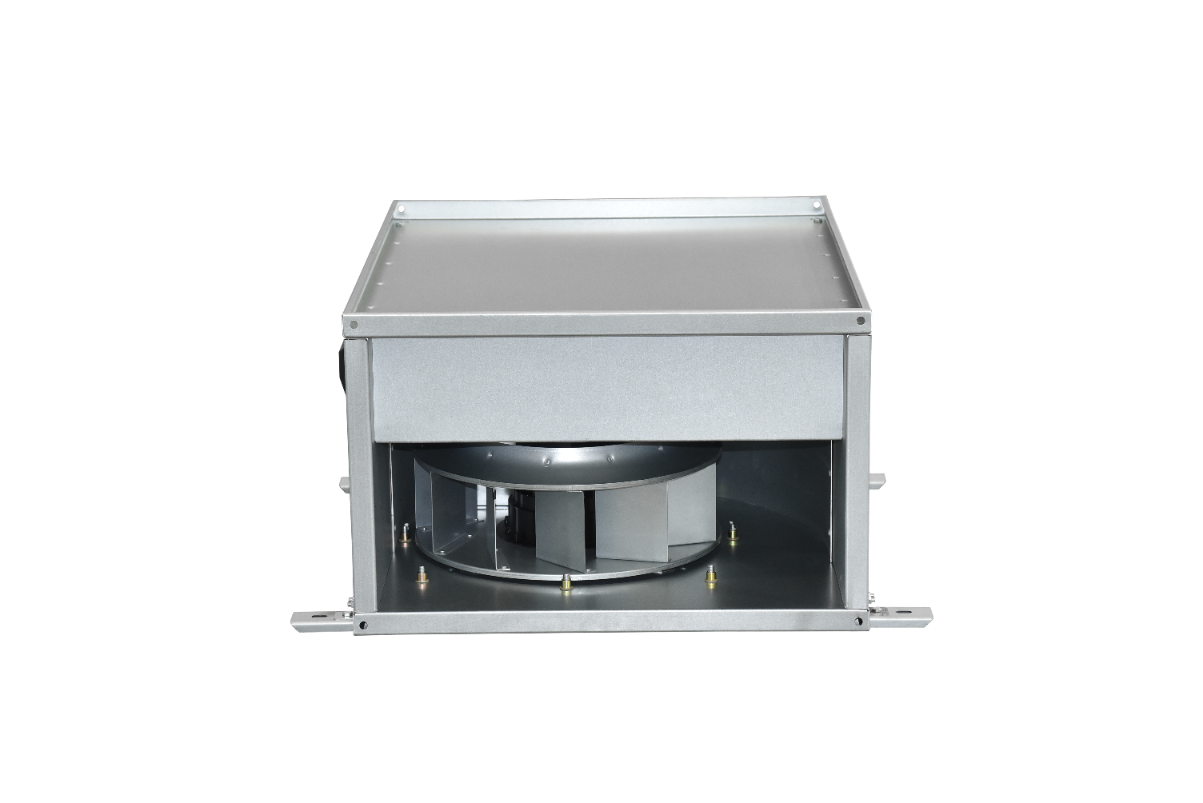
Why Standard Industrial Fans Fail Across Diverse Operational Scenes
Manufacturing, Warehousing, and Hazardous Zones Demand Radically Different Performance Profiles
Standard industrial fans are rarely fit-for-purpose across distinct operational environments. In manufacturing facilities, they must contend with airborne particulates and airflow obstructions from dense machinery layouts—challenges that fixed-performance designs cannot adapt to. Warehouses, by contrast, require energy-efficient, high-volume airflow over vast, high-ceilinged spaces—a volumetric demand generic fans meet inefficiently. And in hazardous zones—especially those governed by ATEX directives for explosive atmospheres—fans must be intrinsically safe, with spark-proof construction, conductive materials, and strict surface temperature limits: features absent in most off-the-shelf models. Thermal loads vary drastically across these settings—from +40°C excess heat in foundries to sub-zero conditions in cold storage—pushing standardized units beyond their design envelopes. The result is measurable underperformance: 17% higher energy consumption in warehouses (Industrial Ventilation Report 2024) and up to 30% shorter service life in corrosive chemical plants. At its core, the failure stems from applying uniform fan architecture to inherently non-uniform airflow patterns, contaminant profiles, and safety-critical constraints.
Static Pressure Variability, Spatial Constraints, and Environmental Extremes Break One-Size-Fits-All Designs
Real-world installations expose critical weaknesses in standardized fan systems—particularly where static pressure fluctuates, space is limited, or environmental conditions exceed nominal ratings. In aging facilities, ductwork resistance varies unpredictably, derailing fixed fan curves and causing 22% airflow instability in retrofit projects. Low-clearance mounting surfaces or irregular structural interfaces force mechanical compromises—like shortened shafts or misaligned bearings—that accelerate wear and vibration. Environmental stressors compound these issues: high-humidity food processing environments corrode aluminum impellers three times faster than in climate-controlled spaces, while abrasive cement dust in material handling applications erodes blade geometry beyond tolerance limits. Collectively, these factors explain why 68% of industrial fan failures occur within 18 months of installation in non-ideal conditions (Facility Maintenance Journal 2023). When confronted with dynamic static pressure demands, spatial confinement, or operational temperatures spanning −40°C to +80°C, standardized architectures lack the parametric flexibility to sustain performance integrity.
Core Engineering Principles for Customized Industrial Fan Structure Design
Parametric Modeling Driven by Thermal Load, ATEX Compliance, and Acoustic Zoning Requirements
Effective customization begins with parametric modeling grounded in site-specific operational data—not catalog specs. Three inputs anchor this process: thermal load (to calculate required airflow volume and static pressure), ATEX classification (to mandate spark-proof materials, conductivity thresholds, and surface temperature limits), and acoustic zoning requirements (often enforcing ≤75 dB(A) in occupied areas). Engineers adjust variables like blade pitch, hub-to-tip ratio, and tip clearance within simulation environments to generate and test dozens of virtual prototypes before physical prototyping. This workflow reduces design-to-production lead time by up to 40%, eliminates costly field modifications, and ensures compliance is engineered-in—not retrofitted. The outcome is a fan whose performance envelope aligns precisely with thermal, safety, and human-factor constraints—without trade-offs.
Material and Geometry Integration: Corrosion-Resistant Alloys and Extreme-Temperature Tolerance (−40°C to +80°C)
Material selection and geometric reinforcement must respond directly to environmental severity—not general industry assumptions. In chemical processing or high-humidity food plants, 316L stainless steel or fiber-reinforced polymer composites replace carbon steel to resist acid vapors and condensation-induced corrosion. Geometry adaptations—such as increased blade root thickness, reinforced hub-to-shaft interfaces, and optimized stress distribution—prevent fatigue cracking during thermal cycling from −40°C to +80°C. Cold-storage applications incorporate elastomeric seals and low-temperature lubricants to ensure reliable start-up; high-heat zones use thermally stable coatings and oversized bearings to maintain dimensional accuracy under sustained thermal load. This integrated approach extends service life three to five times versus standard models—directly lowering total cost of ownership and mitigating unplanned downtime in mission-critical production lines.
Scene-Specific Performance Evaluation: Moving Beyond Generic Efficiency Metrics
Rethinking KPIs: When Noise Reduction, Explosion Safety, or Airflow Stability Outweigh COP in Critical Environments
Relying solely on Coefficient of Performance (COP) misrepresents true fan effectiveness in demanding operational contexts. In laboratories, cleanrooms, petrochemical facilities, or precision manufacturing, success hinges on domain-specific priorities: ultra-stable laminar airflow to prevent particle contamination in pharmaceutical suites; certified ATEX compliance to eliminate ignition risk in hydrocarbon-handling zones; or noise levels below 75 dB(A) to support worker concentration and regulatory compliance in occupied workspaces. These requirements often necessitate design choices—such as lower tip speeds, specialized blade profiles, or explosion-proof enclosures—that modestly reduce COP but deliver essential functional outcomes. Thus, scene-specific Key Performance Indicators (KPIs) replace generic metrics: ±5% airflow uniformity tolerance in sensitive processes, documented ATEX certification (e.g., II 2G Ex db IIB T4 Gb), or validated noise attenuation at operator positions. When core operational risks or quality thresholds aren’t met, even the highest COP holds no value.
Real-World Validation: Measurable Impact of Custom Industrial Fan Implementation
Case Study: Axial Fan Retrofit in High-Bay Food Processing Plant — 42% Noise Reduction & +18% Airflow Stability
A high-bay food processing facility experienced chronic disruptions from excessive noise and inconsistent airflow—issues exacerbated by humidity-driven condensation, spatial constraints in its 15-meter ceiling environment, and standard fans ill-suited to moisture-laden air. A customized axial fan retrofit—designed with optimized blade geometry, corrosion-resistant 316L stainless steel components, and acoustic-dampening housing—delivered quantifiable improvements:
| Performance Metric | Before Retrofit | After Customization | Improvement |
|---|---|---|---|
| Noise Levels | 85 dB | 49 dB | 42% reduction |
| Airflow Stability | ±25% variance | ±7% variance | +18% consistency |
| Temperature Control | 5°C hotspots | <1.5°C variance | 70% reduction |
The solution eliminated condensation-related imbalances that previously degraded airflow stability and compromised hygiene compliance. Worker fatigue decreased significantly, and maintenance intervals extended by 2.3×. This case confirms that purpose-built industrial fans don’t just improve metrics—they resolve root-cause operational failures that generic equipment perpetuates.
FAQ
Q: Why don’t standard industrial fans perform well across different settings?
A: Because they are designed with a one-size-fits-all approach and cannot adapt to varying airflow requirements, environmental stresses, and unique safety constraints of diverse operational environments.
Q: What factors contribute to industrial fan failures?
A: Environmental stressors like humidity, temperature extremes, contaminants, and fluctuating static pressures, coupled with design limitations, cause premature wear and product failure.
Q: What are key features of a customized industrial fan?
A: Features include parametric modeling, ATEX compliance, corrosion-resistant materials, and noise reduction tailored to specific environmental and operational needs.
Q: How are customers’ operational data used in fan customization?
A: Site-specific data such as thermal load and acoustic zoning requirements are fed into parametric modeling software, enabling engineers to fine-tune design parameters and create effective, compliant solutions.
Q: What types of materials are used in extreme environments?
A: In high-stress conditions, corrosion-resistant alloys like 316L stainless steel, fiber-reinforced polymer composites, and thermally stable coatings are employed to extend fan lifespan and maintain performance.
Q: What proof exists for the effectiveness of custom fans?
A: Case studies, such as the high-bay food processing facility example, provide measurable performance improvements like 42% noise reduction, 70% better temperature control, and extended maintenance intervals.
Table of Contents
- Why Standard Industrial Fans Fail Across Diverse Operational Scenes
- Core Engineering Principles for Customized Industrial Fan Structure Design
- Scene-Specific Performance Evaluation: Moving Beyond Generic Efficiency Metrics
- Real-World Validation: Measurable Impact of Custom Industrial Fan Implementation
- FAQ