 EN
EN

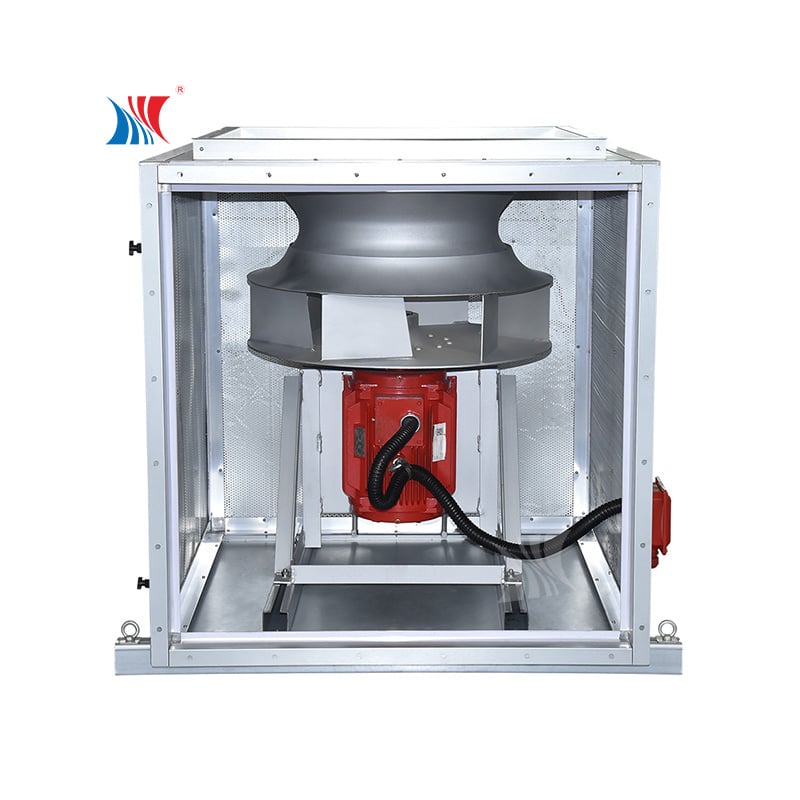
When Standard Fan Specifications Do Not Match the Actual System
Standard centrifugal fans are often a practical choice for general ventilation, air handling and other routine applications. Problems can arise, however, when a catalog-selected fan is applied to a process system with unusual resistance, corrosive gases, high temperatures, variable operating conditions or strict reliability requirements. The issue is not necessarily that a standard centrifugal fan is poorly designed. More often, the selected fan does not fully match the system in which it has to operate.
Industrial ventilation systems rarely operate at one perfectly stable duty point. Filters become loaded, dampers are adjusted, ductwork configurations change, process conditions vary and equipment connected downstream may introduce additional pressure loss. These changes can move the operating point away from the condition originally considered during fan selection. A centrifugal fan should therefore be evaluated against the complete system resistance curve rather than airflow alone.
Fan performance is normally described through relationships among airflow, pressure, speed, power and efficiency. ANSI/AMCA Standard 210-25 / ASHRAE 51-25 provides standardized laboratory methods for determining these aerodynamic performance characteristics. This reinforces an important engineering principle: fan selection should be based on defined test conditions and system requirements rather than a single nominal airflow figure.
Variable frequency drives can provide valuable operating flexibility, particularly where airflow demand changes during the process. However, a VFD does not correct an incorrectly selected fan, unsuitable impeller geometry or an inaccurately estimated system resistance. The fan, motor, drive and duct system need to be considered as one operating system.
Why System Resistance and Operating Range Matter
A centrifugal fan reaches an operating point where its performance curve intersects the resistance curve of the connected system. If system resistance changes, the operating point changes as well. This is why a fan that performs well during commissioning may behave differently after filters become dirty or process equipment is modified.
For industrial applications, engineers should consider the normal operating point together with expected minimum and maximum flow conditions. A design that works only at one point may provide limited flexibility when the process changes. It can also create unnecessary energy consumption if the fan is consistently operated away from its intended efficiency range.
The solution is not always to select a larger fan. Oversizing can introduce its own problems, including unnecessary motor capacity, throttling losses, higher initial cost and inefficient operation at reduced flow. A properly engineered selection instead considers the required airflow, static pressure, air density, temperature, gas composition, operating speed, motor power and expected operating envelope.
This approach is particularly important for dust collection systems, process exhaust, combustion air, fume extraction and other industrial applications where resistance can change during operation. The goal is to select a fan that remains stable and practical across the expected range rather than optimizing the design around one idealized condition.
Material Selection Becomes Critical With Corrosive or Contaminated Air
Material selection is one of the biggest differences between general-purpose ventilation and industrial process fans. When the airstream contains corrosive gases, moisture, chemical vapors, salt, dust or other aggressive contaminants, the impeller and housing materials must be evaluated against the actual operating environment.
A carbon steel fan may be suitable for relatively clean air, but that does not mean it is appropriate for every industrial exhaust application. Corrosion can reduce material thickness, damage impeller surfaces, affect balance and eventually compromise mechanical integrity. Surface coatings may provide useful protection in selected environments, but coating performance depends on the substrate, chemical exposure, temperature, surface preparation and application method.
An industrial fan specification should therefore identify the air composition and operating conditions before materials are selected. Relevant information can include gas concentration, humidity, temperature, particulate content, expected exposure duration and whether condensation can occur.
Depending on the application, engineers may evaluate coated carbon steel, stainless steel, aluminum or more specialized alloys. There is no universal “best” material. The correct choice depends on corrosion resistance, temperature capability, mechanical strength, fabrication requirements and total project cost.
The same principle applies to shafts, bearings, seals, fasteners and other components. Selecting a corrosion-resistant impeller while leaving vulnerable components exposed to the same environment does not create a genuinely application-specific solution.
Efficiency Should Be Evaluated Across the Actual Duty Cycle
Fan efficiency is often discussed as if it were a single number, but industrial systems rarely operate at exactly one condition throughout their service life. A process may require different airflow rates at different production stages, while a ventilation system may respond to pressure, temperature or process-control signals.
This makes the operating envelope important. A fan should be evaluated not only at the design point but also at expected minimum and maximum operating conditions. Blade configuration, impeller diameter, rotational speed, housing geometry and motor selection can all influence the resulting performance.
Backward-inclined, airfoil and radial designs each have different characteristics and are suited to different applications. The correct choice depends on the required pressure, particulate loading, temperature, efficiency target, maintenance environment and other project conditions.
Variable speed control can improve controllability when properly integrated with the system. Reducing fan speed can reduce airflow and pressure, but the available operating range must still remain within the manufacturer's recommended performance envelope. Motor selection should also consider the actual power requirement rather than simply adding excessive capacity as a safety margin.
For projects where energy performance is important, buyers can request fan performance data based on recognized testing procedures. AMCA identifies ANSI/AMCA 208 for calculation of Fan Energy Index and ANSI/AMCA 205 for fan energy efficiency classification, providing additional tools for evaluating fan efficiency.
Noise and Vibration Require a System-Level Approach
Industrial fan noise cannot be evaluated accurately from blade style alone. Sound levels depend on fan size, rotational speed, airflow, pressure, installation arrangement, inlet and outlet conditions and the acoustic characteristics of the surrounding system.
For this reason, statements such as “this blade design always produces a certain dBA level” should be treated carefully. A meaningful acoustic specification should identify the test method, measurement location, operating condition and whether the stated value represents sound power or sound pressure.
AMCA provides specific standards for fan sound testing, including ANSI/AMCA Standard 300 and related rating procedures. Its certification framework also distinguishes aerodynamic performance testing from sound-performance testing.
Mechanical vibration deserves similar attention. Poor balancing, misalignment, inadequate foundations, resonance, bearing problems or unsuitable operating conditions can all contribute to vibration. Fan balancing and vibration requirements should therefore be established during the design stage rather than treated solely as maintenance issues.
Depending on the installation, an engineered package may include vibration isolation, flexible connections, acoustic treatment, silencers or structural modifications. These measures should be selected according to the actual source of the noise or vibration rather than added as generic accessories.
Hazardous Locations Require Application-Specific Safety Engineering
Fans used in environments containing flammable gases, vapors or combustible dust require careful coordination between mechanical design and electrical safety requirements. The correct approach is to begin with the hazardous-area classification and the characteristics of the material being handled.
Spark-resistant construction may be appropriate for certain applications, but “explosion-proof fan” is not a sufficient technical specification by itself. The fan's airstream components, clearances, bearings, drive arrangement, motor and electrical equipment may each have different requirements.
The appropriate construction should be established according to the applicable project standards and local regulations. In the United States, this may involve requirements associated with classified locations under the National Electrical Code, while international projects may follow different hazardous-area classification systems.
This distinction is important because mechanical spark resistance and electrical hazardous-location certification are not the same thing. A fan supplier should therefore request information about the hazardous location, gas or dust classification, temperature class, process medium and installation requirements before proposing a design.
Grounding and static-control measures may also be relevant where electrostatic accumulation presents a risk. However, these features should be specified based on the actual process and applicable safety assessment rather than presented as universal requirements for every hazardous application.
High-Temperature Applications Need More Than Heat-Resistant Materials
High-temperature industrial fan applications introduce several engineering challenges at the same time. Increasing air temperature changes air density and can affect the relationship between volume flow, pressure and fan power. At elevated temperatures, thermal expansion can also influence clearances, shaft alignment, bearing conditions and impeller geometry.
The appropriate design therefore depends on the actual temperature range and whether the stated temperature is continuous, intermittent or associated with a process upset condition. Furnace exhaust, kiln ventilation, thermal processing and hot-gas extraction may require different engineering approaches.
Material selection should consider temperature, corrosion, mechanical loading and expected service life. In some applications, stainless steels or nickel-based alloys may be appropriate; in others, a suitably engineered carbon or low-alloy steel with appropriate protection may be sufficient. The correct material cannot be selected from temperature alone.
Bearing arrangements also need to be reviewed. Depending on the temperature transmitted through the shaft and bearing housing, engineers may use shaft extensions, heat shields, specialized lubrication arrangements or other cooling measures. Rotor balancing and thermal growth allowances are equally important because a rotor that performs correctly at ambient conditions may behave differently after reaching operating temperature.
What a Specialized Fan Manufacturer Should Provide
For demanding industrial projects, the value of a specialized centrifugal fan manufacturer is not simply the ability to build a larger fan. The more important capability is translating process requirements into a workable mechanical design.
The engineering process should begin with application data. This normally includes airflow, pressure, temperature, gas composition, altitude, particulate loading, operating hours, installation arrangement, motor requirements and any applicable safety standards.
The manufacturer can then evaluate fan type, impeller geometry, housing configuration, materials, shaft arrangement, bearings, seals, motor and speed-control requirements. A properly developed performance curve should show the expected relationship between airflow and pressure and identify the intended operating region.
Where testing is required, the applicable standard should be defined before testing begins. ANSI/AMCA 210-25 / ASHRAE 51-25 provides standardized laboratory methods for aerodynamic fan performance, while AMCA also maintains separate procedures and certification programs for sound performance.
It is also important to distinguish testing from certification. AMCA states that laboratory accreditation and the Certified Ratings Program are separate programs, so a project specification should clearly identify whether it requires testing in an accredited laboratory, certified product ratings, or both.
From Fan Selection to Long-Term Reliability
The strongest industrial fan projects usually treat fan selection as part of the complete air-handling system rather than as a standalone equipment purchase. A reliable design considers the process conditions, system resistance, operating range, materials, motor, controls, installation and maintenance requirements together.
For buyers, a useful specification should therefore go beyond “CFM and static pressure.” It should describe the actual medium being handled, temperature, pressure conditions, operating range, corrosive or particulate exposure, hazardous-area requirements, noise limits, installation conditions and expected duty cycle.
This information gives the manufacturer enough technical context to recommend a suitable centrifugal fan rather than simply matching a catalog number.
A specialized manufacturer can also add value through performance verification, factory inspection, balancing, documentation, commissioning support and replacement-part planning. These services become especially useful when the fan is part of a critical process where unplanned downtime can affect production.
The objective is not to make every industrial fan highly customized. The objective is to customize the elements that actually influence reliability and performance. When airflow, pressure, materials, temperature, operating range, controls and safety requirements are properly matched, the resulting centrifugal fan is more likely to perform predictably throughout its intended service life.
Frequently Asked Questions
Why can a standard centrifugal fan perform poorly in an industrial system?
A standard centrifugal fan may perform poorly when its selected operating point does not match the actual system resistance, air conditions or duty cycle. Changes in filters, dampers, ductwork and process equipment can shift the operating point after installation.
What information is needed to select an industrial centrifugal fan?
Important information normally includes required airflow, static or total pressure, air or gas temperature, density, composition, particulate loading, operating range, installation conditions, motor requirements and applicable safety standards.
Does a VFD solve an incorrectly selected fan?
Not necessarily. A VFD provides speed control and can be useful for variable-demand systems, but it does not replace correct fan selection or system-resistance analysis. The fan and drive should be evaluated together across the intended operating range.
How should materials be selected for corrosive gases?
Material selection should be based on the actual gas composition, concentration, temperature, humidity, condensation potential and expected exposure. Impeller, housing, shaft, seals and fasteners should be reviewed as a complete system.
What standards can be used for centrifugal fan performance testing?
ANSI/AMCA 210-25 / ASHRAE 51-25 provides standardized laboratory methods for determining fan aerodynamic performance, including airflow, pressure, power and efficiency. AMCA also provides separate standards and rating programs covering fan sound performance and energy-related metrics.
Table of Contents
- When Standard Fan Specifications Do Not Match the Actual System
- Why System Resistance and Operating Range Matter
- Material Selection Becomes Critical With Corrosive or Contaminated Air
- Efficiency Should Be Evaluated Across the Actual Duty Cycle
- Noise and Vibration Require a System-Level Approach
- Hazardous Locations Require Application-Specific Safety Engineering
- High-Temperature Applications Need More Than Heat-Resistant Materials
- What a Specialized Fan Manufacturer Should Provide
- From Fan Selection to Long-Term Reliability
-
Frequently Asked Questions
- Why can a standard centrifugal fan perform poorly in an industrial system?
- What information is needed to select an industrial centrifugal fan?
- Does a VFD solve an incorrectly selected fan?
- How should materials be selected for corrosive gases?
- What standards can be used for centrifugal fan performance testing?