 EN

Pre-Installation Assessment: Matching Cabinet Fan Requirements to Application Needs
Identifying Primary Ventilation Objective: Electronics Cooling, Chemical Fume Extraction, or VOC Off-Gassing
Before specifying a cabinet fan, define the dominant ventilation objective—electronics cooling, chemical fume extraction, or VOC off-gassing—as each demands distinct performance criteria and design priorities. Electronics cooling focuses on heat removal; chemical fume extraction requires reliable source capture; VOC off-gassing calls for sustained, low-concentration dilution. A mismatched objective often leads to premature component failure, unsafe exposure, or noncompliance.
For electronics, quantify total thermal load in watts before calculating airflow. For chemical fume extraction, capture velocity typically needs 100–150 fpm at the hood face to contain airborne contaminants. For VOC off-gassing, air exchange must maintain concentrations below occupational exposure limits (ACGIH 2022). Use the table below to align objective with primary metric and selection priority.
| Ventilation Objective | Primary Metric | Selection Priority |
|---|---|---|
| Electronics cooling | Heat load (W) | Airflow path, static pressure |
| Chemical fume extraction | Capture velocity (fpm) | Hood placement, duct resistance |
| VOC off-gassing | Air changes per hour | Low-leakage housing, materials |
Confirm whether the space requires spot cooling, general dilution ventilation, or source-capture exhaust before selecting a fan type. This early distinction prevents oversizing or undersizing—and avoids hidden compliance gaps.
Evaluating Enclosure Specifications and Ambient Conditions for Cabinet Fan Compatibility
After confirming the ventilation objective, audit enclosure dimensions, internal layout, and site conditions. Measure height, width, depth, and free internal volume—cable bundles, sub-panels, or dense component arrays can reduce effective airflow by 30% or more. Ambient temperature, humidity, dust, and corrosive gases determine required IP rating and material compatibility. ASHRAE TC 9.9 recommends inlet air at 18–27°C and dew point 5–15°C for electronics enclosures; sustained operation above this range accelerates capacitor aging (ASHRAE 2021). In chemical or outdoor environments, verify NEMA/IP protection and confirm housing and impeller materials resist corrosion or degradation. Also inspect existing blanking panels and cable routing to prevent recirculation. These factors ensure the selected cabinet fan matches real-world operating conditions—not just nominal airflow ratings.
Sizing and Selecting the Right Cabinet Fan for Optimal Airflow Performance
Calculating Required CFM Based on Heat Load, Chemical Volume, or VOC Emission Rates
Quantify the dominant ventilation load first. For electronics cooling, use the standard airflow equation:
CFM = (3.16 × heat load in watts) ÷ allowable temperature rise in °F
A 400 W load with a 20°F allowable rise requires ~63 CFM. Add 20–30% for filter, grille, and duct resistance.
For chemical fume extraction or VOC off-gassing, calculate enclosure volume (in ft³), then multiply by required air changes per hour (ACH). Light VOC control typically requires 6–10 ACH; heavier fume capture may need 12–20 ACH. Divide by 60 to convert to CFM.
Always size the cabinet fan to the larger of the heat-driven or contaminant-driven airflow requirement—and verify its static pressure capacity against system losses (e.g., duct length, bends, filters) before final selection.
Choosing Cabinet Fan Type (Axial vs. Centrifugal), Mounting Style, and IP Rating
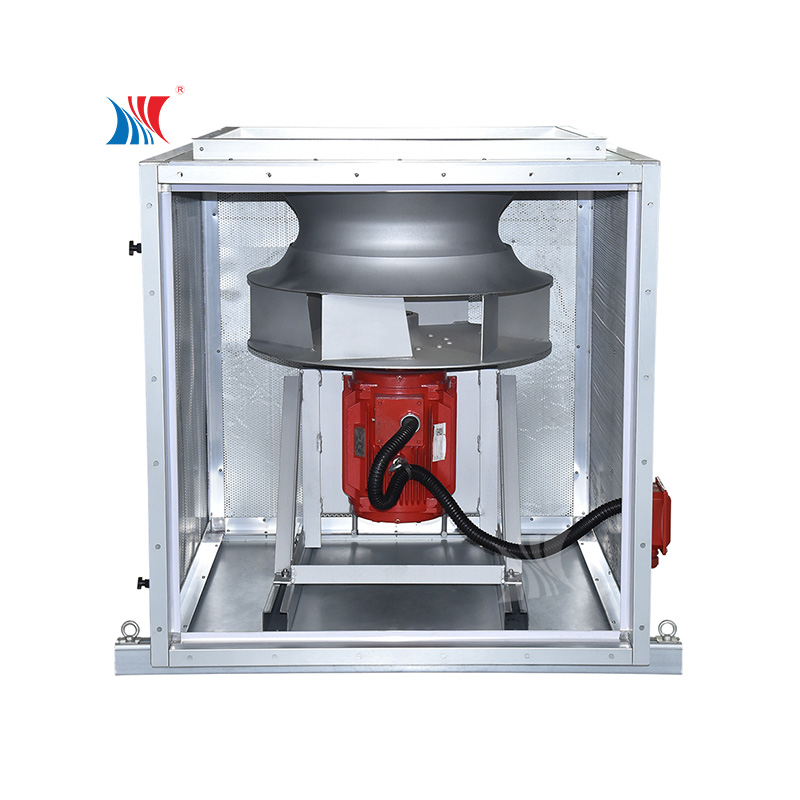
Axial fans deliver high airflow at low static pressure—ideal for open cabinets with minimal obstructions. Centrifugal blowers generate higher static pressure and better handle dense layouts, long duct runs, or heavy filtration. Match mounting style to airflow strategy: door-mounted fans suit spot cooling; roof-mounted units enhance natural convection; wall-mounted exhaust fans improve cross-flow.
Select IP rating based on environment: IP44 for clean indoor spaces, IP54 for dusty industrial settings, and IP55/IP56 for washdown or outdoor exposure. Confirm certifications (UL, CE, RoHS), operating temperature range, and continuous-duty rating. The optimal cabinet fan balances airflow, static pressure, noise, ingress protection, and application-specific reliability—not generic specs.
Proper Cabinet Fan Installation: Mounting, Ducting, and Electrical Integration
Cutout Placement, Rotation Direction, and Blowing vs. Sucking Configuration Logic
De-energize the enclosure before marking or cutting. Place intake cutouts near the lower front or bottom and exhaust cutouts near the upper rear or top—leveraging natural thermal buoyancy. Verify rotation direction using the arrow on the fan casing and confirm airflow path before mounting.
A blowing configuration pushes filtered air into the cabinet and is preferred for electronics cooling. A sucking configuration pulls air out, creating negative pressure ideal for chemical fume or VOC extraction. Avoid opposing fans without defined cross-flow paths; instead, design bottom-to-top or side-to-side airflow to eliminate dead zones. Mark cutout centers with a spirit level and angle square for precise alignment. Use a template or hole saw matched to the fan’s cutout size—and verify the opening won’t intersect rails, busbars, or internal components. Route cables away from fan openings to minimize airflow obstruction.
Securing, Vibration Dampening, and Ensuring Airtight Duct Interface Seals
Use the fan’s supplied mounting hardware and tighten fasteners evenly to avoid frame warping. Install a closed-cell foam or rubber gasket between fan body and panel to dampen vibration and reduce noise transmission. For ducted installations, align the fan precisely with the duct axis and support the mounting frame if installed above a suspended ceiling.
Apply a thin bead of neutral-cure silicone sealant on the flange before setting the fan. Seal all duct joints with aluminum tape or HVAC-grade duct sealant—not cloth-backed tape, which cracks under thermal cycling. Ensure intake and exhaust seals are continuous: even minor leaks degrade static pressure and allow unfiltered air to bypass the cabinet fan. Use a torque-limiting driver or hand tool to avoid stripping screws in plastic housings. After tightening, briefly energize the fan and feel for escaping air around the flange—re-tighten as needed.
Post-Installation Validation and Long-Term Cabinet Fan Performance Management
After mounting and wiring, conduct a commissioning sequence. Confirm impeller rotation matches the marked direction on the housing and measure current draw against nameplate full-load amps. A deviation >10% usually indicates duct blockage, incorrect wiring, or fan mismatch. Record baseline airflow, static pressure, and vibration velocity at inlet and outlet. Thermal imaging after 30–60 minutes of operation reveals hot spots and recirculation zones that compromise cooling or fume removal. Verify duct seals and gaskets are airtight—post-installation leakage is a leading cause of underperformance. ASHRAE 2023 ventilation guidance emphasizes verifying delivered airflow before accepting the installation.
Long-term performance management should be trend-driven. Clean impeller blades, guards, and filters monthly—dust buildup increases resistance and energy consumption by up to 25%. Quarterly, inspect bearings, fastener torque, and electrical connections. Annually, remeasure CFM and static pressure against baseline: a drop >15% signals filter loading, duct leakage, or bearing wear. Integrate vibration monitoring to detect imbalance early and extend bearing life. Update the maintenance log after every check so replacement decisions rest on data—not assumption. If the application changes—new electronics, increased chemical volume, or additional VOC sources—repeat the airflow calculation and adjust the cabinet fan or duct path accordingly.
FAQ: Common Questions About Cabinet Fan Installation and Maintenance
Why is determining the ventilation objective important before selecting a cabinet fan?
The ventilation objective—whether electronics cooling, chemical fume extraction, or VOC off-gassing—defines the performance requirements and design criteria. Mismatching the fan to the objective can lead to inefficiency, higher costs, and potential safety risks.
How do I calculate the required CFM for a cabinet fan?
For electronics cooling, use the formula: CFM = (3.16 × heat load in watts) ÷ allowable temperature rise in °F. For chemical fume extraction or VOC off-gassing, calculate enclosure volume and multiply it by the necessary air changes per hour (ACH), then divide by 60 to convert to CFM.
What’s the difference between axial and centrifugal fans?
Axial fans provide high airflow with low static pressure, suitable for open, unobstructed cabinets. Centrifugal fans work better for applications requiring higher static pressure, such as dense layouts, long ducts, or highly filtered systems.
How important are duct and gasket seals for cabinet fan performance?
Airtight seals are crucial to prevent air leaks that can reduce static pressure and allow unfiltered air to bypass the fan, causing decreased performance. It also helps ensure better energy efficiency.
How often should cabinet fans be maintained?
Routine maintenance is essential. Clean impeller blades, guards, and filters monthly; inspect bearings and fasteners quarterly. Check airflow and pressure levels annually to identify performance drops due to wear or environmental conditions.
Table of Contents
- Pre-Installation Assessment: Matching Cabinet Fan Requirements to Application Needs
- Sizing and Selecting the Right Cabinet Fan for Optimal Airflow Performance
- Proper Cabinet Fan Installation: Mounting, Ducting, and Electrical Integration
- Post-Installation Validation and Long-Term Cabinet Fan Performance Management
-
FAQ: Common Questions About Cabinet Fan Installation and Maintenance
- Why is determining the ventilation objective important before selecting a cabinet fan?
- How do I calculate the required CFM for a cabinet fan?
- What’s the difference between axial and centrifugal fans?
- How important are duct and gasket seals for cabinet fan performance?
- How often should cabinet fans be maintained?